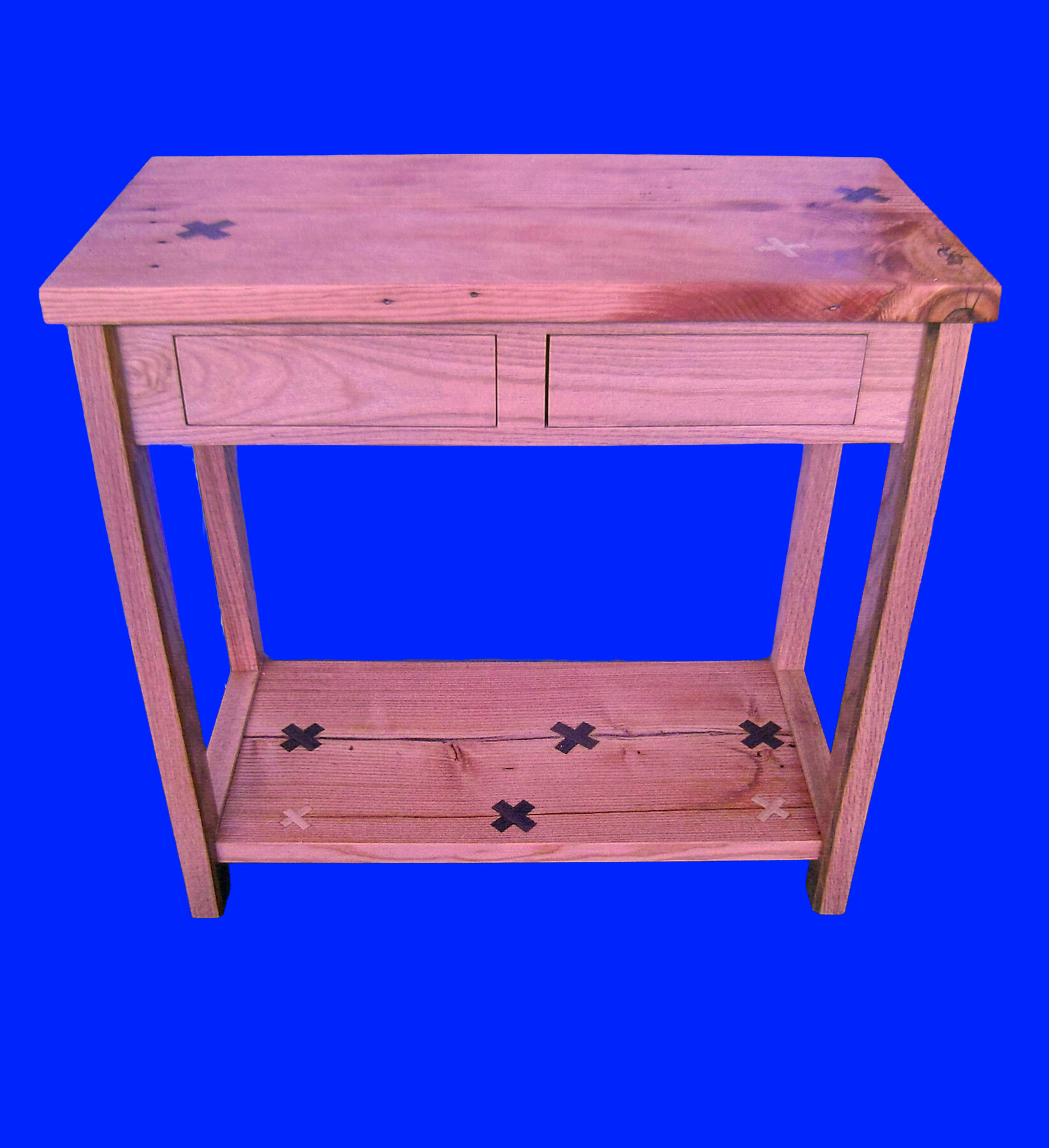
A console table with two drawers and no handles — both fronts sit perfectly flush with the skirt, so there's nothing to grab. The trick is a mechanism Andrew built in: push one drawer in, and the opposite drawer pops open on its own, freed just enough to pull the rest of the way. It's a small piece of furniture-as-puzzle, and the name comes straight from how it works: push one in, the other comes out.
The skirt and drawer fronts are reclaimed oak that once lined the walls of the baggage-claim area at LAX, its grain matched carefully all the way around the table so the piece reads as one continuous band of wood. The legs keep a chamfer that preserves the wood's original stain, left visible on purpose rather than sanded away — the same instinct behind the exposed history in the Space Café Tables and the first belly tables.
The top and lower shelf are a different, older story: heavily used antique reclaimed Douglas fir, salvaged from a dumpster in Hollywood. The wood needed real reinforcement, so Andrew stitched it back together with rows of his own dark wood stitches — X-shaped patches embedded 3/4" to 1" deep into the surface. Set against the pale, aged fir, the dark stitches read almost like hand-stitched thread holding the boards together, turning a structural fix into the top's main visual feature.